
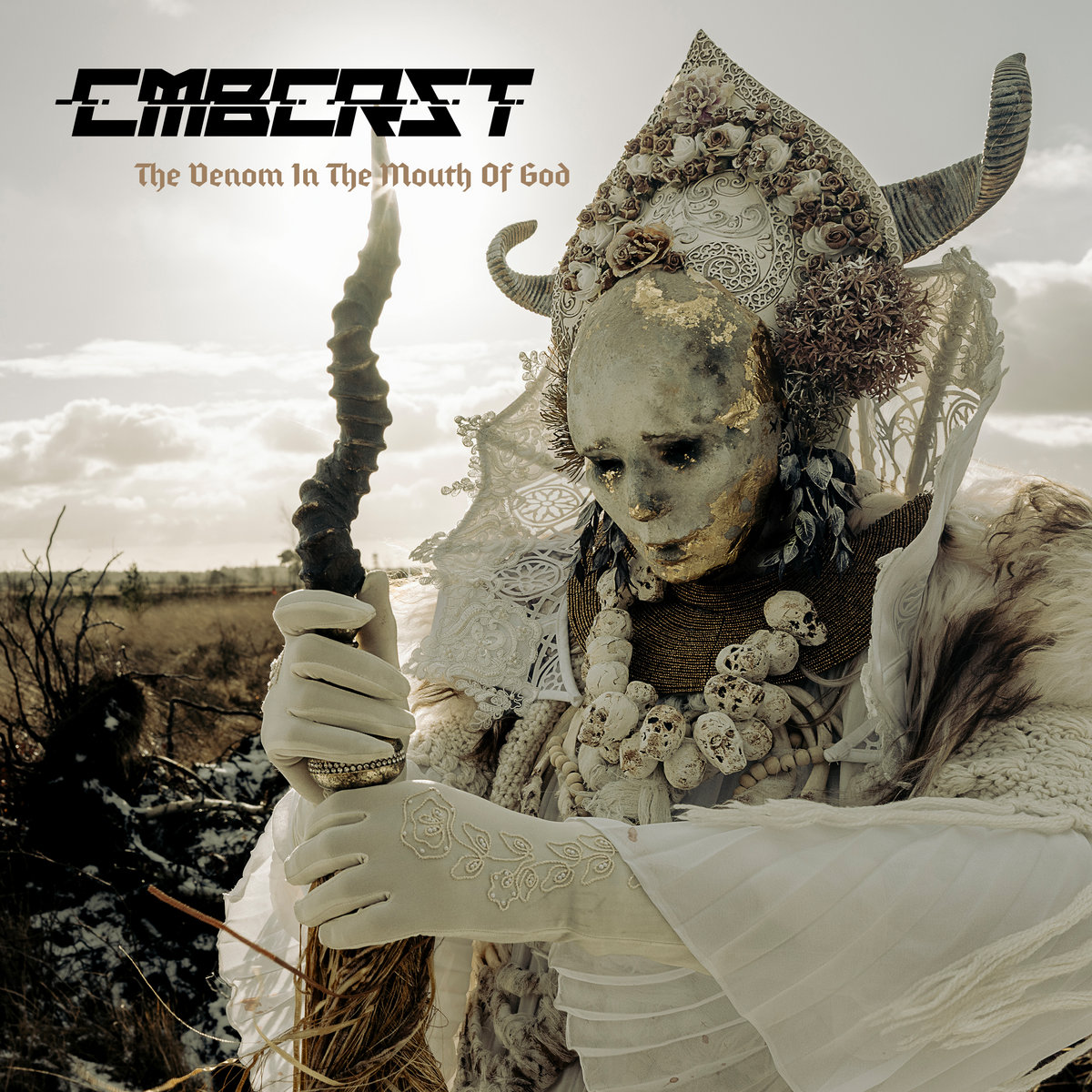
Combichrist – The Venom In The Mouth Of God [Out Of Line]
In more than one way, Combichrist are a venture that perfectly encapsulates the whole early 2000s aggrotech/TBM movement, its rise, fall, and changes.
The brainchild of Andy LaPlegua (Ole Anders Olsen) of Icon Of Coil’s fame, it started as a power noise project in 2003, adding afterward more and more EBM and dance elements, fathering the so-called techno body music subgenre.
After incorporating more structured old-school elements and influences from other genres, and morphing into a band with an actual live lineup, the project started using guitars too; that led to the controversial album This Is Where Death Begins, a punk-tinged industrial-metal work with a different crowd in mind.
The following albums fine-tuned this approach, mixing the older sound of the band and the new-found love for metal sounds, with varying results and never fully convincing the longtime fans.
Now, they return with The Venom In The Mouth Of God, an album that offers some surprises, without forfeiting the string-chord instrument. The first noticeable thing is the increased use of clean vocals from LaPlegua, something that, paired with the often present 90s trance lead patterns, strongly reminds us of Icon Of Coil and the softer side of mid-era Combichrist.
ODR welcomes us with its heavy riffing and throbbing basslines, giving us a danceable melting-pot underlined by tribal undertones and eerie synths. Desolation follows suit with its even more electronic structure upon which dramatic vocal refrains are layered; the spirit of Icon Of Coil is quite strong here, evoked by both vocals and euro trance sounds.
Born Deströyer is a robotic TBM mantra with obsessive beats and captivating choruses, while Feraline is a modern EDM pastiche underlined by steady riffs. Rise returns to industrial metal territory, with Rammstein-like guitar loops and more aggressive and harsher shouts.
Each Scar A Vision employs synthwave basslines and classic Icon Of Coil vibes, adding rock elements throughout its development, while The Way We Want To Be Seen is a surprising synthetic ballad that recalls Nine Inch Nails cinematic scope. Second Ending (We Have Been Here Before) ends the album with a track that starts with acoustic guitars, evolves with epic synth sounds, and then climaxes into big beat and trance mantras, closing the circle.
The Venom In The Mouth Of God is the most coherent and realized Combichrist’s album in the last ten years. Closer in spirit to Icon Of Coil’s last album, Machines Are Us, and mid-era Combichrist (think of Making Monsters, and We Love You) than the last outputs from the band, it is characterized by an apocalyptic, ominous atmosphere that gives us a dystopian feeling. Gone are the gangsta bravado and tongue-in-cheek sexual innuendos of the past. Now in his fifties, LaPlegua seems more concerned with the (sorry) state of the world and personal demons. Musically, the work goes full circle, rediscovering sounds and structures from his past, and fusing them with the latter developments of his career. This is not a return to the Combichrist of old, but a late-era synthesis of even older sounds and newer ones, in order to conceive something familiar, but all together different.
Release date: July 24th, 2026.
Text by: Davide Pappalardo.
Combichrist son, en más de un sentido, un proyecto que encapsula perfectamente todo el movimiento aggrotech/TBM de principios de los 2000, su auge, su caída y sus transformaciones.
Ideado por Andy LaPlegua (Ole Anders Olsen), conocido por Icon Of Coil, comenzó en 2003 como un proyecto de power noise, incorporando después cada vez más elementos de EBM y dance, dando origen al llamado subgénero techno body music.
Tras sumar elementos old-school más estructurados e influencias de otros géneros, y transformarse en una banda con una formación en directo real, el proyecto empezó también a usar guitarras; eso llevó al controvertido álbum This Is Where Death Begins, un trabajo de industrial-metal con tintes punk pensado para un público distinto.
Los álbumes siguientes afinaron ese enfoque, mezclando el sonido más antiguo de la banda con el nuevo interés por los sonidos metal, con resultados desiguales y sin convencer del todo a los fans de siempre.
Ahora regresan con The Venom In The Mouth Of God, un álbum que ofrece algunas sorpresas, sin renunciar al instrumento de cuerdas metálicas. Lo primero que se nota es el mayor uso de voces limpias por parte de LaPlegua, algo que, unido a los patrones de trance de los 90 presentes con frecuencia, nos recuerda mucho a Icon Of Coil y al lado más suave del Combichrist de la etapa intermedia.
ODR nos recibe con sus pesados riffs y sus líneas de bajo palpitantes, ofreciendo un crisol bailable subrayado por matices tribales y sintetizadores inquietantes. Desolation continúa con una estructura aún más electrónica sobre la que se superponen estribillos vocales dramáticos; el espíritu de Icon Of Coil está muy presente aquí, evocado tanto por las voces como por los sonidos euro trance.
Born Deströyer es un mantra TBM robótico con ritmos obsesivos y estribillos cautivadores, mientras que Feraline es un remake EDM moderno resaltado por riffs constantes. Rise vuelve al terreno del industrial metal, con loops de guitarra al estilo Rammstein y gritos más agresivos y ásperos.
Each Scar A Vision emplea líneas de bajo synthwave y clásicas vibraciones de Icon Of Coil, añadiendo elementos rock a lo largo de su desarrollo, mientras que The Way We Want To Be Seen es una sorprendente balada sintética que recuerda el alcance cinematográfico de Nine Inch Nails. Second Ending (We Have Been Here Before) cierra el álbum con un tema que arranca con guitarras acústicas, evoluciona con sonidos de sintetizador épicos, y luego culmina en mantras de big beat y trance, cerrando así el círculo.
The Venom In The Mouth Of God es el álbum más coherente y logrado de Combichrist en los últimos diez años. Más cercano en espíritu al último álbum de Icon Of Coil, Machines Are Us, y al Combichrist de la etapa intermedia (piénsese en Making Monsters y We Love You) que a los últimos trabajos de la banda, se caracteriza por una atmósfera apocalíptica y ominosa que transmite una sensación distópica. Han desaparecido la bravuconería gangsta y las insinuaciones sexuales socarronas del pasado. Ahora en la cincuentena, LaPlegua parece más preocupado por el (lamentable) estado del mundo y por sus propios demonios personales. Musicalmente, el trabajo cierra el círculo, redescubriendo sonidos y estructuras de su pasado y fusionándolos con los desarrollos más recientes de su carrera. No se trata de un regreso al Combichrist de antaño, sino de una síntesis tardía entre sonidos aún más antiguos y otros más nuevos, para concebir algo familiar mas, a la vez, completamente distinto.
Fecha de lanzamiento: 24 de julio, 2026.
Texto: Davide Pappalardo.








Deja una respuesta
Lo siento, debes estar conectado para publicar un comentario.