

Damaged Clock
Damaged Clock has found its strongest European ally in the Valencia-based label Soil Records. After releasing two albums on this platform, the Colombian producer returns with Repairing the Clock, his most ambitious work to date. This introspective album tells his story sonically across 105 tracks designed from different soundscapes. We spoke with Damaged Clock himself about this album and his current moment.
You’ve been active since around 2018. Is this a good artistic and personal time to release a work of this magnitude?
Yes, absolutely. I’m at a point in my life full of changes, both mental and physical, and creating this album was part of that process. In reality, the album was made in the middle of that transformation, and I feel it’s a demonstration of that internal change I’m experiencing.
The title is very evocative: «Repairing the Clock.» Does it refer to a new musical phase for you?
More than a new phase, I think it represents my continuous exploration. I’m not as focused on the party scene as before, but rather on touching on everything that inspires me. I consider myself a very creative person with a mental hyperactivity linked to music, and this album is a work that reflects that energy and that constant need to experiment.
Following up on the title, what does this clock that needs repairing represent?
The clock is me. For me, time is what we are as human beings: something that cannot be stopped. «Repairing the Clock» means repairing myself, healing, rebuilding myself. It’s basically about repairing David.
What human values have influenced the creativity of this album?
Mainly self-care and self-love. More than values towards others, they were values towards myself. I feel like I’m a completely different person from who I was one or two years ago. I don’t know if it’s growing up or changing habits and mindset, but this album was born from that process of personal transformation.
The album is a massive project; 105 tracks is a feat that would be difficult for many producers to accomplish. You refer to it as a «sonic autobiography.» Why did you need so many tracks to define yourself as an artist?
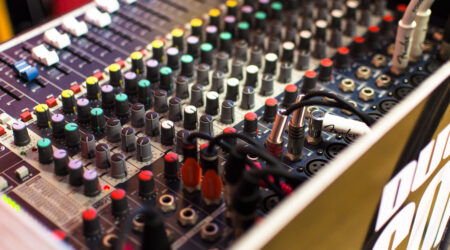
Defining myself as an artist has been the most difficult thing. I’ve always struggled to answer «What do you sound like?» I have a musical hyperactivity that is sometimes mentally complex, but I discovered that working in an analog way made the creative flow faster and more natural.
This album is the result of everything I’ve heard, lived, and absorbed in my social circles. I’m like a sponge. I don’t identify with releasing just an EP of 3 or 4 tracks because I feel it’s too short for me. Maybe 105 tracks seems excessive, but it flowed out of me that way… and I feel I could do it again. It’s the beginning of something new.
Furthermore, I tell personal stories—uncomfortable ones, funny ones, from my adolescence… It’s an autobiography disguised as music.
The choice of Thomas P. Heckmann, Crystal Geometry, Umwelt, and Legowelt is very powerful. What do their versions bring to the album?
We chose the remixers very carefully together with Soil. We wanted artists who also work with hardware and who share a similar vision of music and machines. Some already had a connection with Soil or with me, others less so, but they all fit perfectly with the essence of the album.
They contribute a very important part: they are artists I deeply admire, respect, and who have influenced my career. Managing to bring them together was a great challenge, but the result was impeccable.
The vinyl is divided into an A-side oriented towards industrial and a B-side towards electro. Do you see this division as a microcosm of the two opposite poles that exist within the complete project?
Yes, although the complete album goes much further. Most of the album is electro and another large part is industrial, but there’s also house, drum and bass, techno, trance, more cinematic things…
We chose industrial and electro for the vinyl because those genres have opened many doors and friendships for me. They are pillars in my career, so it was important to represent them on those two sides.
The Soil Records label seems to be a crucial home for you. How has Soil Records influenced your sonic evolution?
With Soil, and specifically with Sof, we built more of a family friendship than a professional relationship. That trust took away my insecurities and gave me total creative freedom. They never told me «focus on this or that,» but rather «do what you like.»
That freedom expanded my mind. When there are no limits or imposed genres, creativity opens up, and projects as large as this one become possible.
In a few days, you return to Valencia for a new Soil Records showcase, and it’s not the first time you’ve performed in this city, as well as in other European cities. Tell us about what you have planned for your visit to Valencia.
It’s going to be a special day. I’ve learned not to have high expectations, just to arrive and do it. I’ve been doing live sets for eight years and I usually compose music thinking about the party, observing the artists on the lineup.
But this time will be different: I’m going to perform songs from the album and from previous works, with a more artistic and intimate focus. Maybe someone will hear their favorite song in a unique live version.
Obviously, it’s a challenge because that album was made with my entire studio, and I can’t travel with all the machines. I’ll have to reduce it to a single machine and adapt. But I know when the moment comes, it will be very special.
And finally, what comes after releasing what, for any artist, would be the most pivotal work of their career?
Honestly, I don’t believe this is «the final milestone» of my career. For me, it’s the door to something new. I see it as a musical book, and like any writer… I want to keep writing.
In the future, I want to do projects just as large or even larger. Better sound, more learning, more stories, more mental depth. I’m excited for what’s to come. I feel this album isn’t the end… it’s just the beginning of something much bigger.
Damaged Clock ha encontrado en el sello valenciano Soil Records su mayor aliado en el continente europeo. Después del lanzamiento de dos álbumes en esta plataforma, el productor colombiano regresa con Repairing the Clock, su trabajo más ambicioso hasta la fecha. Introspectivo, sonoramente cuenta su historia a lo largo de 105 pistas diseñadas desde distintos entornos sonoros. De este álbum y de su momento actual hablamos con el propio Damaged Clock.
Llevas en activo aproximadamente desde 2018, ¿es un buen momento artístico y personal para publicar un trabajo de esta envergadura?
Sí, totalmente. Estoy en un punto de mi vida lleno de cambios, tanto mentales como físicos, y crear este disco fue parte de ese proceso. En realidad, el álbum se hizo en medio de esa transformación, y siento que es una demostración de ese cambio interno que estoy viviendo.
El título es muy evocador: «Repairing the Clock», ¿hace referencia a una nueva faceta musical tuya?
Más que una nueva faceta, creo que representa mi exploración continua. No estoy tan enfocado en la fiesta como antes, sino en tocar todo lo que me inspira. Me considero una persona muy creativa y con una hiperactividad mental ligada a la música, y este disco es una obra que refleja esa energía y esa necesidad constante de experimentar.
Siguiendo con el título, ¿qué representa este reloj que necesita ser reparado?
El reloj soy yo. Para mí el tiempo es lo que somos como seres humanos: algo que no se puede detener. “Repairing the Clock” significa repararme a mí mismo, sanar, reconstruirme. Es básicamente reparar a David.
¿Qué valores humanos te han influido en la creatividad de este álbum?
Principalmente el autocuidado y el amor propio. Más que valores hacia los demás, fueron valores hacia mí mismo. Siento que soy una persona completamente distinta a la que era hace uno o dos años. No sé si es crecer o cambiar hábitos y mentalidad, pero este álbum nace de ese proceso de transformación personal.
El álbum es un proyecto masivo, 105 pistas es una proeza difícil de llevar a cabo por muchos productores, y tú te refieres a él como una autobiografía sonora, ¿por qué has necesitado tantos cortes para definirte como artista?
Definirme como artista ha sido lo más difícil. Siempre me costó responder a “¿a qué suenas?”. Tengo una hiperactividad musical que a veces es mentalmente compleja, pero descubrí que trabajar de forma analógica hizo que el flujo creativo fuera más rápido y natural.
Este disco es el resultado de todo lo que he escuchado, vivido y absorbido en mis círculos sociales. Soy como una esponja. No me identifico con sacar solo un EP de 3 o 4 temas porque siento que me queda corto. Tal vez 105 pistas parezcan exageradas, pero me fluyó así… y siento que podría volver a hacerlo. Es el inicio de algo nuevo.
Además, cuento anécdotas personales, incómodas, divertidas, de mi adolescencia… Es una autobiografía disfrazada de música.
La elección de Thomas P. Heckmann, Crystal Geometry, Umwelt y Legowelt es muy potente. ¿Qué aportan sus versiones al álbum?
Elegimos los remixers con mucho cuidado junto a Soil. Queríamos artistas que también trabajaran con hardware y que tuvieran una visión similar de la música y de las máquinas. Algunos ya tenían relación con Soil o conmigo, otros no tanto, pero todos encajaban perfectamente con la esencia del disco.
Ellos aportan una parte muy importante: son artistas que admiro profundamente, que respeto y que han influido en mi trayectoria. Lograr reunirlos fue un gran reto, pero el resultado fue impecable.
El vinilo se divide en una cara A orientada al industrial y una cara B al electro. ¿Ves esta división como un microcosmos de los dos polos opuestos que existen dentro del proyecto completo?
Sí, aunque el álbum completo va mucho más allá. La mayor parte del disco es electro y otra gran parte es industrial, pero también hay house, drum and bass, techno, trance, cosas más cinematográficas…
Escogimos industrial y electro para el vinilo porque esos géneros me han abierto muchas puertas y amistades. Son pilares en mi carrera, así que era importante representarlos en esas dos caras.
El sello Soil Records parece ser una casa crucial para ti. ¿Cómo ha influido Soil Records en tu evolución sonora?
Con Soil, y específicamente con Sof, más que una relación profesional, construimos una amistad familiar. Esa confianza me quitó inseguridades y me dio total libertad creativa. Nunca me dijeron “enfócate en esto o aquello”, sino “haz lo que te gusta”.
Esa libertad expandió mi mente. Cuando no hay límites ni géneros impuestos, la creatividad se abre, y proyectos tan grandes como este se vuelven posibles.
En unos días regresas de nuevo a Valencia en un nuevo showcase de Soil Records, y no es la primera vez que actúas en esta ciudad, al igual que en otras ciudades europeas. Háblanos sobre lo que tienes previsto en tu visita a Valencia.
Va a ser un día especial. Ya aprendí a no tener expectativas altas, solo llegar y hacerlo. Llevo ocho años haciendo live sets y normalmente compongo música pensada para la fiesta, observando a los artistas del line-up.
Pero esta vez será diferente: voy a interpretar canciones del disco y de trabajos anteriores, con un enfoque más artístico e íntimo. Quizás alguien escuche su canción favorita en una versión live única.
Obviamente es un reto, porque ese disco fue hecho con todo mi estudio y no puedo viajar con todas las máquinas. Tendré que reducirlo a una sola máquina y adaptarme. Pero sé que cuando llegue el momento, será muy especial.
Y por último, ¿qué viene después de publicar lo que para cualquier artista sería el trabajo más trascendental de su carrera?
Honestamente, no creo que este sea “el hito final” de mi carrera. Para mí es la puerta a algo nuevo. Lo veo como un libro musical, y como cualquier escritor… quiero seguir escribiendo.
En el futuro quiero hacer proyectos igual de grandes o incluso más grandes. Mejor sonido, más aprendizaje, más historias, más profundidad mental. Me emociona lo que viene. Siento que este disco no es el final… es apenas el comienzo de algo mucho más grande.




Deja una respuesta
Lo siento, debes estar conectado para publicar un comentario.